ARTICLE
What Does a Business Coach Do?
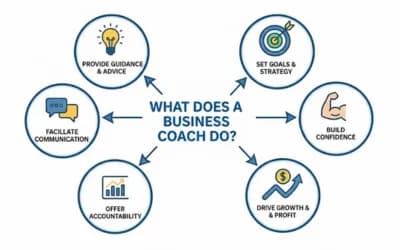
A business coach partners with you to develop and achieve your business goals. They work collaboratively with you to create a plan, set meaningful goals, and identify areas for growth. They also provide the support and accountability that keeps you moving forward.
The coaching relationship is built on trust and honest conversation. A good coach listens first, understands your unique situation, and then helps you find your own path forward - not by telling you what to do, but by asking the right questions and challenging your assumptions.
Why Business Coaching Works
The numbers back it up. According to ICF research, 87% of coaching clients report a positive return on investment, with companies seeing an average ROI of nearly 6x the cost of coaching. Organizations with strong coaching cultures grow 27% faster year over year.
But the real value goes beyond metrics. Working with a coach means having someone in your corner who:
- Helps you see blind spots you can't see yourself
- Holds you accountable when motivation fades
- Challenges you to think bigger
- Celebrates wins alongside you
What a Business Coach Actually Does
Harvard Business Review's research on executive coaching found that the role has evolved significantly. Ten years ago, coaches were hired mainly to fix problems. Today, most coaching focuses on developing capabilities in high-potential leaders.
The top reasons organizations engage coaches:
- Developing high-potential talent - Helping promising leaders step into bigger roles
- Acting as a sounding board - Providing a confidential space to think through challenges
- Navigating transitions - Supporting leaders through growth phases, new roles, or organizational change
Clarifying Goals and Building a Plan
One of the first things a coach does is help you get clear on what you actually want. Many business owners know they want "more" - more revenue, more time, more impact - but haven't defined what that specifically looks like.
A coach works with you to turn vague aspirations into concrete goals with clear timelines. Then you build a realistic plan together, breaking big goals into manageable steps.
Providing Accountability
Ideas without execution don't change anything. A coach keeps you honest about the commitments you make. When you tell someone you'll have something done by next Tuesday, you're far more likely to follow through.
This accountability isn't about pressure or guilt. It's about having someone who genuinely wants to see you succeed and won't let you settle for less than you're capable of.
Offering an Outside Perspective
When you're inside your business every day, it's hard to see patterns that are obvious to an outsider. A coach brings fresh eyes and asks questions you might not think to ask yourself.
They can also challenge assumptions you've held for so long you forgot they were assumptions. Sometimes the biggest breakthroughs come from questioning "the way we've always done it."
Developing Both Hard and Soft Skills
Business success requires both technical expertise and people skills. A good coach helps you develop in both areas.
Hard skills include financial management, strategic planning, data analysis, and operational efficiency. A coach can help you identify gaps in your knowledge and find ways to fill them.
Soft skills - leadership, communication, emotional intelligence, conflict resolution - often make the bigger difference. These are the skills that help you build a team, retain good people, and create a workplace where everyone can find their brilliance.
Working With Your Strengths
Effective coaching doesn't try to turn you into someone you're not. Instead, it helps you leverage what you're already good at while developing strategies to manage your weaker areas.
Maybe you're great with clients but struggle with financial details. A coach won't try to make you love spreadsheets - but they'll help you build systems and find the right people so the numbers don't hold you back.
What to Look for in a Business Coach
Finding the right coach matters. Here's what to consider:
Relevant experience. Look for someone who understands your industry or the specific challenges you face. They don't need to have run exactly your type of business, but they should understand your world.
Coaching style. Some coaches are directive, others more collaborative. Some focus on mindset, others on tactics. Think about what approach will work best for you.
Chemistry. You'll be sharing challenges and vulnerabilities with this person. Make sure you feel comfortable and respected. Trust your instincts here.
Track record. Ask for references. Talk to people who've worked with them. Look for evidence that they've helped others achieve meaningful results.
What Your Coach Should Expect From You
Coaching is a two-way relationship. Your coach should expect you to:
- Show up prepared and engaged
- Be honest about what's working and what isn't
- Follow through on commitments you make
- Stay open to feedback, even when it's uncomfortable
- Do the work between sessions
The best coaching happens when both people are fully invested. A coach can provide tools, perspective, and accountability - but you're the one who has to take action.
Let's Build Brilliance Together
If you're ready to take your business to the next level, Mayo Biz Coaching & Consulting is here to partner with you. We start every relationship by listening - understanding where you are, where you want to go, and what's getting in the way.
Contact us today for a free consultation. Let's have an honest conversation about your goals and see if we're the right fit to work together.

About the Author
Mark Mayo
Head Coach, MBC
We get up each morning excited about sharing our 20-plus years of business acumen with small business owners and their teams. Collaborating with hard-working owners to achieve their personal and business goals brings rewards. When we develop you and grow your leaders, we create the momentum that moves you and your business forward. It starts with a first step. Then we can build brilliance together.